As cities change, parts of them become obsolete, demolished, and replaced with new ones. Between city structures, there remain spaces that we do not necessarily consider as actual places. Often nature finds its way into these spaces, and sometimes self-generated urban culture also emerges. Developing the city while not forgetting the value of these places, and doing so sustainably and flexibly, requires an understanding of urban nature and a change in traditional ways of thinking.
Authors
Rolf Autio, Pipsa Penttinen
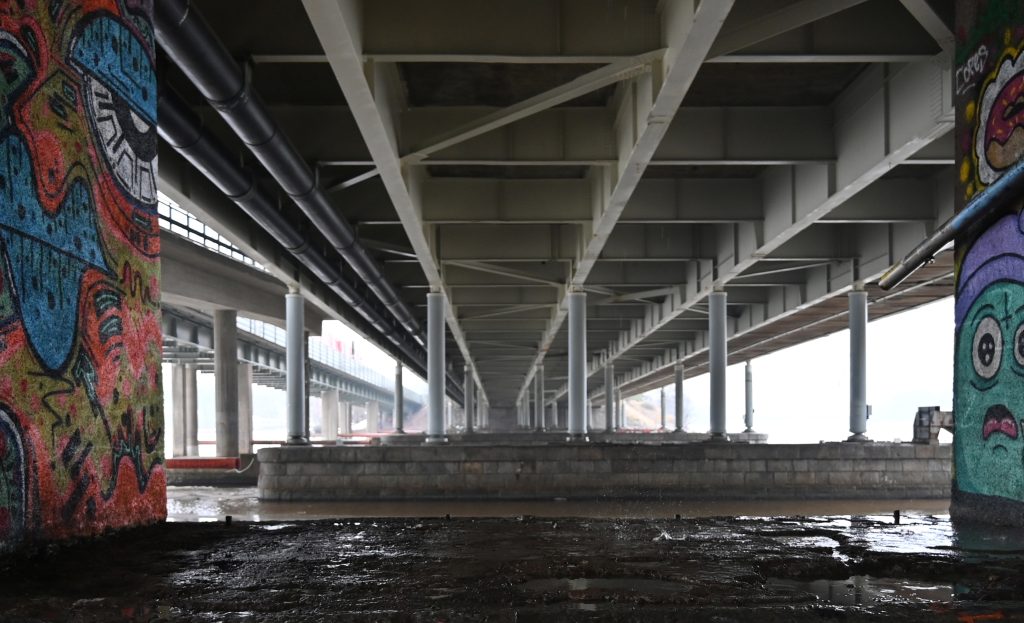
In early spring, we had a site visit beneath the Kulosaari Bridge, next to the Redi shopping center in the Kalasatama district in Helsinki. On a drizzly and misty day, in the pale light under the bridge, long views opened up, rhythmically framed by the bridge’s dramatic concrete structures. The city was just awakening to spring, but on the brightest edges of the dim bridge underpass, grasses and birch twigs that had settled there were already beginning to turn green. The impression created by the sea, the massive bridge structure, and wild vegetation was unique.
We stood in an interstitial space within the built environment—a kind of non-place. These seams in the urban fabric are left between the spaces and underneath structures—such as roads, bridges, stairs, and other routes—that are needed for society’s functions and that are usually single-purpose. They also appear in the less used spaces around building facades and between city blocks. As the city changes and grows, such places are continuously created.
Nature finds its way into these interstitial spaces. Such seams in the urban structure are significant for biodiversity. Wasteland and underutilized plots support diverse vegetation and other organisms. At best, and when allowed to develop undisturbed, interstitial spaces enrich the urban landscape and bring variety to it. Human activity may also emerge on these seams, and they can develop into significant concentrations of urban culture.
At first glance, such spaces may appear forgotten and neglected, but they have the potential to become a significant and rich part of our shared urban environment if we are willing to think more broadly than usual. Change in our attitude to the interstitial spaces requires an understanding of the character and possibilities of the city’s ”non-places” and urban nature, so that we can find a balance between development and the values that already exist.
On the Significance of Non-Places and Interstitial Spaces
Sitong Luo and Klaske Havik delve into urban interstitial spaces in their article Gardens of Interstitial Wildness – Cultivating Indeterminacy in the metropolitan Landscape (Spool 7/1).
In their article, Luo and Havik describe the urban landscape as dynamic, fragmented, and changing. Urban landscapes are shaped by networks of functions, optimized distances, and efficiency. The city can be viewed as a ”mosaic of functional spaces,” supported by visible and invisible infrastructure networks.
Luo and Havik’s perspective is that the city consists primarily of single-use spaces and structures that serve a particular need, and the quality of these spaces is secondary to their functionality. Inevitably, undefined ”interstitial space” remains between and within the single-use places.
They highlight that an increasing number of studies show that spaces outside the city’s functional system and abandoned spaces offer opportunities for urban nature development and for the emergence of alternative community-based activities. According to the authors, what makes urban interstitial spaces valuable is precisely that they are free from functional definition and therefore open to many different uses.
Luo and Havik confirm in their article that unmaintained interstitial spaces develop into rich concentrations in terms of urban ecology and biodiversity. The spaces develop vegetation that is suited to the place and reflects its characteristics. Their central idea is that this development can and should be strengthened through landscape architecture. Non-places can be connected through good design to become an important part of the city, while at the same time supporting the area’s inherent character and the characteristics of urban nature. People also discover these interstitial spaces, and the urban culture that develops as a result is valuable, because it is often non-commercial and free, thus allowing spontaneous use essential for underground culture, for example.
Interstitial spaces or non-places do not need to already have activities or vegetation; rather, through landscape architecture, we can also create a foundation for urban nature and conditions for new uses.
Infrastructure Shapes Urban Structure
Non-places and interstitial spaces are linked to infrastructural changes. Previously used freely used land is taken over to accommodate more defined city functions, and society’s basic infrastructure requires modifications due to increasing use, deterioration, or changing operational practices. New seams appear in the urban fabric when the old is demolished and replaced.
The demolition of buildings is widely discussed now. The topic is researched at universities, and campaigns are set up to favour building renovation instead of demolition. In architecture, renovation is seen as a field that enables a more sustainable future and preserves the temporal layers of the urban landscape. The discussion’s goals regarding environmental sustainability and the conservation of cultural heritage are critically important, but the debate often culminates in disputes over the conservation of individual landmark buildings.
From a landscape architecture perspective, the tear-down versus repair discussion concerns the entire built environment, including infrastructure, for which the question is particularly timely. For example, a large portion of Finland’s urban road infrastructure was built in the latter half of the 20th century, meaning it needs major renovation. Parts of it have reached the end of the technical lifespan.
The role of infrastructure in the urban landscape and fabric is significant. They define the cityscape and landscape significantly. Unfortunately, obsolete parts are often demolished, while it would be possible to transform them into new places that enrich the city.
New Life for Old Infrastructure
Tampere took an approach different from the mainstream. When the traffic on State Road 12, which bypassed the city center, was diverted to a tunnel, it freed up one of the two highway bridges that crossed the Tammerkoski Rapids leading to Lake Näsijärvi. Instead of demolishing the concrete and steel beam structure bridge completed in 1975, the city decided to convert it into a recreational area and walking route.
Maanlumo designed a lively and green park bridge from the former highway bridge. The abundant and diverse vegetation designed for the bridge, along with the levels and furnishings that enable rest, increase comfort and create a contrast with the impressive and dominant infrastructure structure. Now the bridge appears as an inviting place rather than a conventional traffic route, both from up close and from a distance.
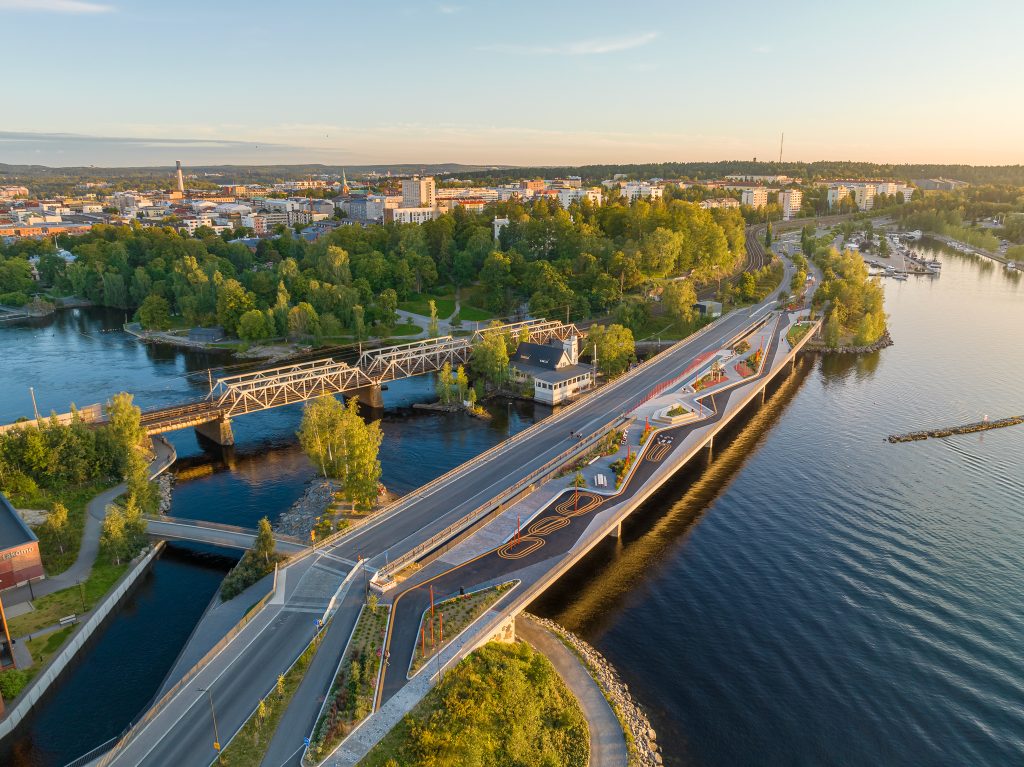
Photo: Marko Kallio, Skyfox.
The park bridge required courage to boldly experiment with something new and a willingness on the part of the city organisation to operate according to circular economy principles. A great deal of municipal infrastructure runs beneath the bridge, and relocating it would have been difficult and expensive; preserving the old structure was resource-wise. Additionally, pedestrians and cyclists needed a route over the water in any case. Central objectives of Tampere’s development strategy are to increase the possibilities for walking and to transform waterfront areas into accessible parts of the city.
The park bridge could have been realized with a more conventional solution, simply a light traffic connection, and this would have fit the objectives. However, the city was able to see the opportunities and benefits created by the bridge’s release more comprehensively.
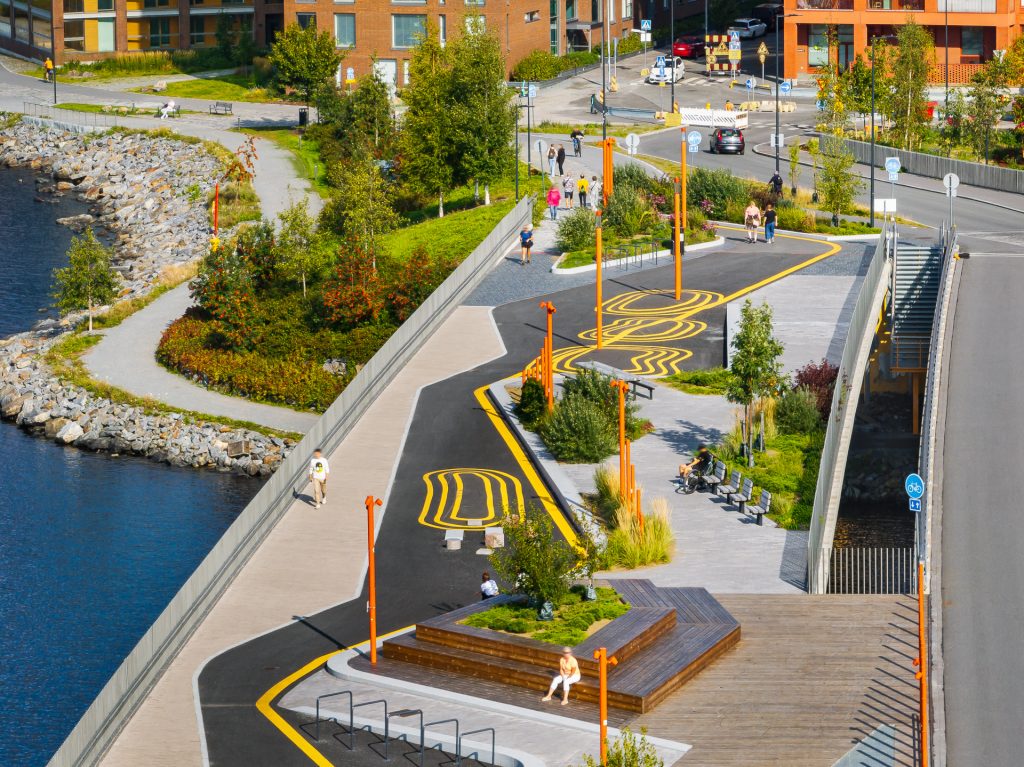
City residents have made the new recreational area their own. Photo: Kuvio Oy.
News of Helsinki’s decision to demolish the Hämeentie Bridge as part of area redevelopment raises the question of alternative solutions to demolition. Although the bridge may be at the end of its service life in terms of heavy vehicle traffic, it may well be sufficiently durable for other uses. Perhaps part of the bridge could be preserved and used, for example, as a canopy, or the bridge deck could be transformed into an active urban space and landmark.
Helsinki has previously transformed old structures into new uses. For example, the Baana walking and cycling route and recreational area (Loci landscape architects, 2012) was built in the gorge of the former harbour railway. In addition to bicycle and pedestrian paths, there are various playing areas and other recreational possibilities. Baana has become an important part of the downtown network and a meaningful meeting place for city residents.
The new use of the old railway gorge was a sustainable solution, but it also enabled the preservation of a visible historical layer in the urban landscape. The character of cities is created by the connection between past and present. That should be kept in mind when planning for the future.
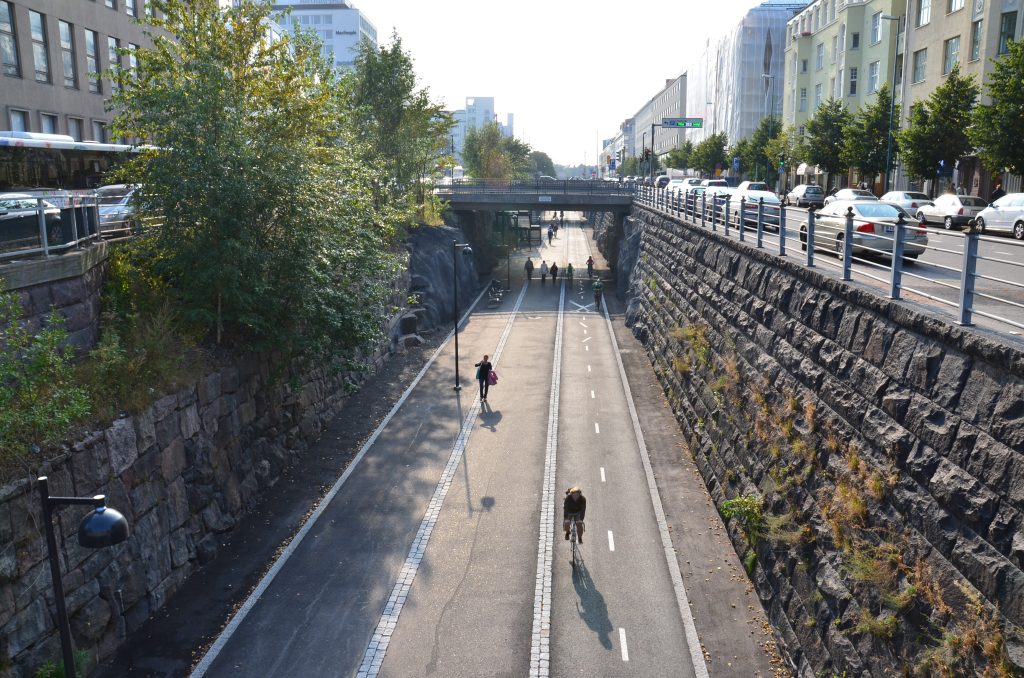
Design: Krista Muurinen / Loci Landscape Architects Oy. Photo: Loci / Maanlumo.
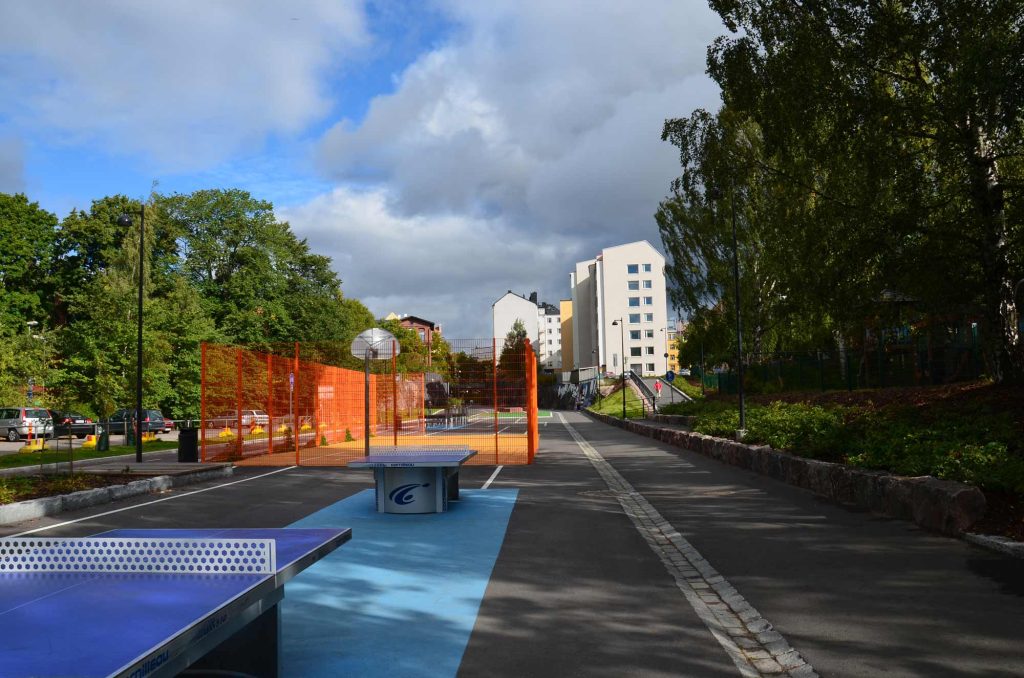
Photo: Loci / Maanlumo
Understanding Urban Nature is Developing
The goals of the demolition debate are essential both for cultural heritage and for strengthening biodiversity. Urban ecology develops through and as a consequence of human activity, even though human activity and what we usually understand as nature do not always align. The urban nature of interstitial spaces has developed to survive in a city environment and the species composition is not entirely the same as in natural areas.
Helsinki has taken steps toward understanding the diversity of urban nature. In 2024, the city published a report Permitted Wildness – A Guide to Evaluating and Enriching Urban Biodiversity in the Built Environment (published in Finnish as Sallitusti villi – Opas kaupunkiluonnon monimuotoisuuden arviointiin ja rikastamiseen rakennetussa ympäristössä,), which offers guidance for planning habitats in human-created environment.
According to the publication, the unmaintained nature of wild urban nature is a value that should be protected in design implementations.
The ecological significance of ruderal areas and wastelands is also highlighted in Natural Types in the Built Environment and Assessment of Their Ecological Condition (published in Finnish as Rakennetun ympäristön luontotyypit ja niiden ekologisen tilan arviointi), a report published in early 2024 by Green Building Council Finland. In a joint project by Aalto University, the University of Helsinki, the Finnish Environment Institute, and a few other organisations, definitions were created for various urban nature occurrences so that they could be identified using consistent criteria and strengthened more effectively.
What else does understanding and developing the possibilities of urban nature require?
Letting Go of the Need for Control
Helmi Kajaste raises the issue of an architectural design thinking model in her article in the Finnish Architectural Review (1/2026), titled ”Rajatut ja avoimeksi jätetyt loput” (Closed and Open Endings), in which the central value is the control of the whole. Kajaste compares architecture to film art and considers how the happy endings of films relate to the end result of architecture. She writes that architecture’s culmination is the finished building, and the traditional way of thinking is that through maintenance, the building is kept forever in this state. However, the world is experiencing a major transformation due to, for example, the ecological crisis, which also forces a change in design. According to Kajaste, ”truly change-open design would require accepting incompleteness and insufficiency.”
In landscape architecture, incompleteness is a starting point, because vegetation by nature undergoes continuous change. Despite this, landscape architecture also entails control and the attempt to force vegetation into a certain form maintained through care, for example by favouring certain species. The ideal form of urban green infrastructure has been restrained and controlled, which fortunately has gradually given way to nature-based thinking.
Landscape architecture makes extensive use of research on succession, wild urban nature, and the aging of structures. For example, in Germany’s rust belt, research is being conducted on the synergies between deteriorating industrial structures and nature, the transformation of various structures into ruins, and the functionality of building recycling materials as growing substrates. Several significant European landscape architecture firms, such as the German Atelier Le Balto and the French Wagon Landscaping, have incorporated the wild nature of industrial structures and urban nature into their design principles.
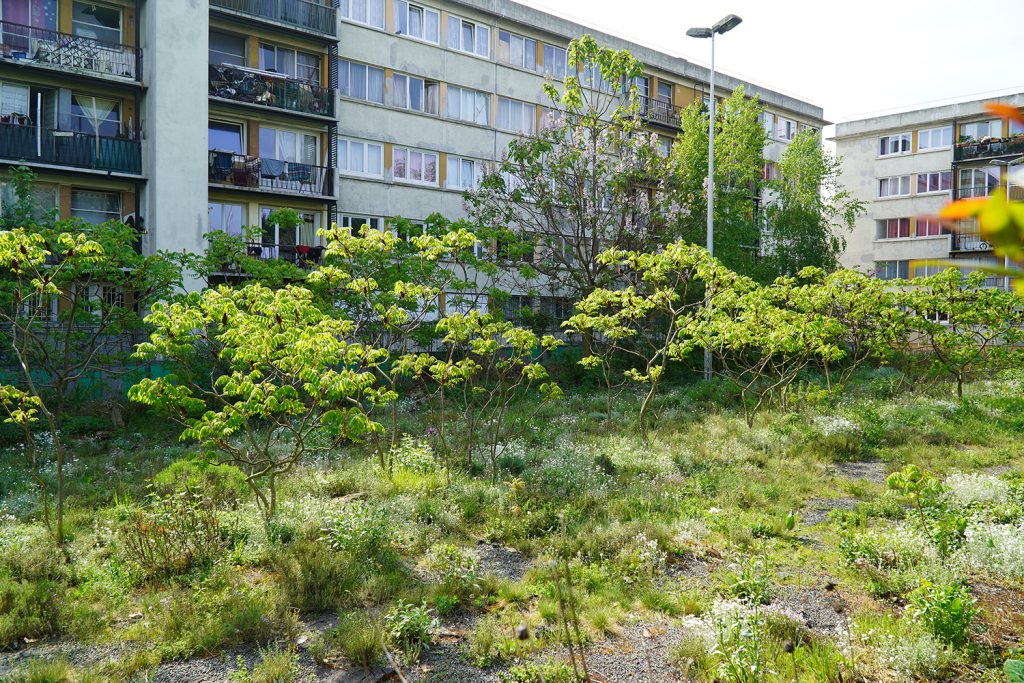
Photo: Rolf Autio.
French gardener, ecologist, and botanist Gilles Clément sees the designer’s role as a developer of the site’s initial phase, whose task is to facilitate nature’s own succession.
One of Clément’s well-known works is a garden complex established on the roof of a World War II submarine base bunker located in Saint-Nazaire, France. In a project carried out in collaboration with landscape architecture firm Colocon, three gardens were realised in the massive and partially unfinished submarine hall, which are important examples of the use of nature-based solutions and letting go of the control of the whole.
The design solutions for the gardens were adapted directly to the prevailing conditions, and existing structures were utilised almost as they were. One of the gardens was made in a shallow concrete basin structure on the roof, to which only a thin layer of new growing substrate was added, shaped into mounds offering light and shade. No vegetation was planted; instead, the place was allowed to develop spontaneously through wind and organisms carrying materials. The garden’s development is monitored, and nearly two hundred different plant species have been found there.
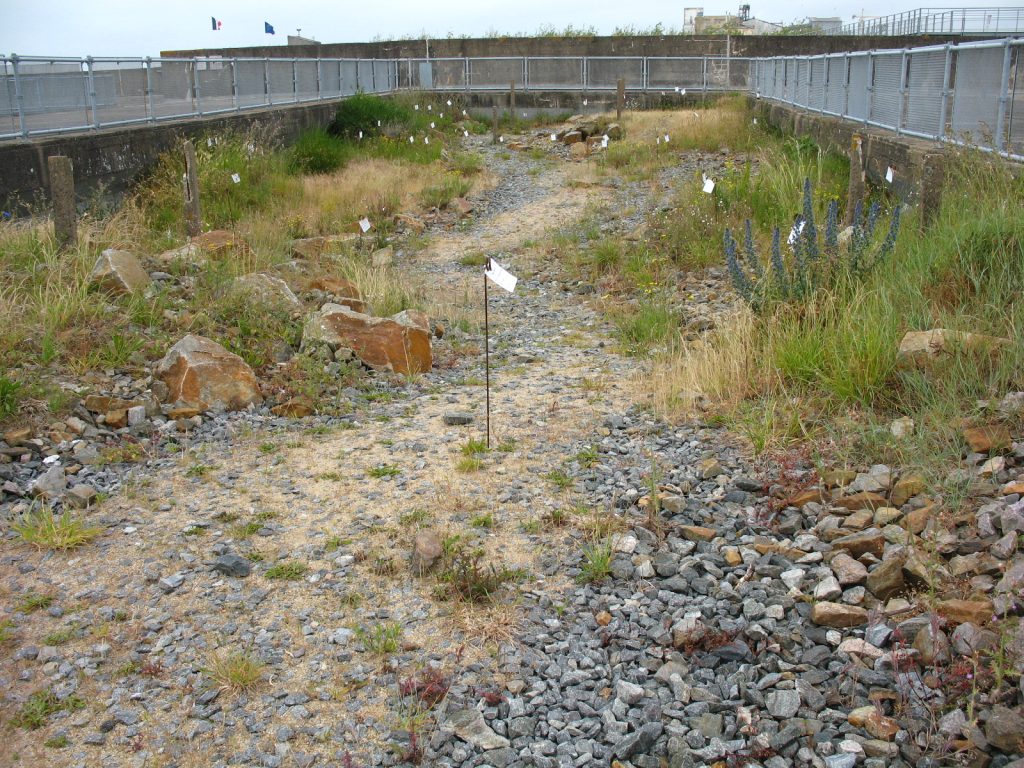
Photo: Gilles Clément.
Good Design Supports Natural Development
How would it be possible to support the strengthening of diverse urban ecology, transform an area into a place where people would want to come and enjoy themselves, and preserve the freedom that indeterminacy brings for both people and nature?
The concentrations of urban nature in interstitial spaces have intrinsic value. When a place is taken into new use, its original character and values disappear unless special attention is paid to their preservation. At the same time, temporal and cultural layers important to the character of the urban landscape may be lost. New ways must be found to develop these areas based on urban nature and to avoid limiting them to a single functional definition.
Luo and Havik address this design-related problem in their article. Design inevitably redefines a place, causing the site’s inherent indeterminacy to diminish. They emphasise the importance of analysis and the skill to accurately identify what phenomena and processes are associated with or might be associated with the place. Good design does not control but supports the natural, characteristic development paths of these environments, which can be understood to apply to both ecological and cultural development.
This requires letting go of the felt need for control that Kajaste advocates for. Solutions experimented with in the submarine hall can be applied at different scales. We can fit more spaces for natural urban nature development within the planned environment. We can create flexible frameworks within which urban nature can take hold, while also enabling self-directed cultural activity to develop.
In landscape architecture, it is easier to let go of the ideal of a controlled whole than in architecture, because outdoor spaces allow for greater experimentation. Structures and circulation routes must be usable and safe, but even within these limits, outdoor space offers abundant freedom for testing new solutions. Circular economy methods develop precisely through experimentation.
There are already numerous ways to apply circular economy principles: a heavily trafficked concrete bridge may be at the end of its original service life, but its structures or parts may be well-preserved and suitable for other uses. Various demolition materials can be reused as-is or modified in pavings, park structures, or even as furnishings; the limit is largely imagination. Implementation requires courage to think beyond conventional solutions.
Deviating from the business-as-usual also requires courage from the commissioners of design. For projects funded with public funds, conventional, already-tested solutions tend to be in favour. Excessive caution, however, can narrow perspectives and lead to, if not dull, then conventional urban landscapes and simplified nature. Traditional models deserve their place, but alongside them, space should be given to experiments and unusual ideas.
It is particularly important to recognise that a project site usually already has its own value. By understanding the nature of non-places and the characteristics of urban nature, we begin to see that not every square meter needs to be designed completely. Ideally, non-places and interstitial spaces would be allowed to flourish after design in a way suited to them and free from narrow definitions. The point is to recognise a range of possibilities, through which a unique, place-aware, adaptable to change, and ecologically sustainable urban environment and landscape can be achieved.
Landscape architects Rolf Autio and Pipsa Penttinen work at Landscape Architecture Office Maanlumo. Autio also teaches Contemporary Landscape Architecture at Aalto University. Discussions with Maanlumo’s landscape architects Elsi Lehto, Krista Muurinen, and Teresa Rönkä also contributed to this text.