

When making efforts to engage children in active travel more frequently, adult-centric perspectives tend to remain at the forefront. But it’s children’s own perceptions that could hold useful insights for not only promoting but also sustaining use of active travel modes. Recent studies point to socialising on the move as one of the factors contributing to children’s enjoyment of active travel to school.
Author
Laura Jaunākā
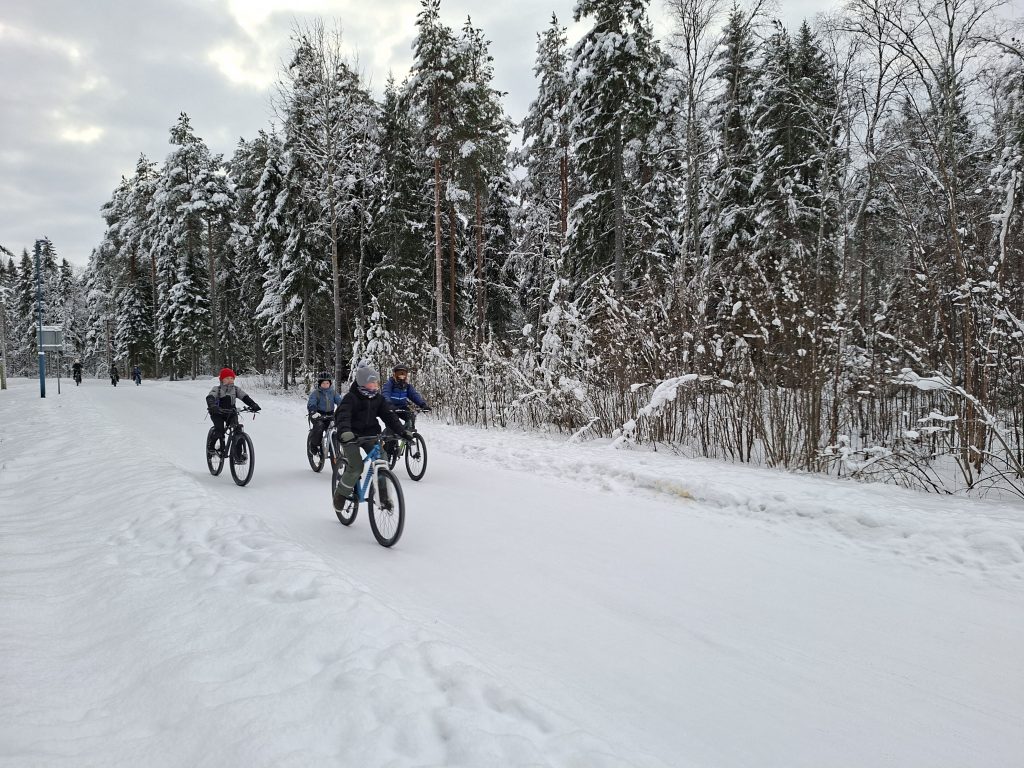
Young pedestrians and cyclists pass by frequently, seemingly untroubled by the freezing temperatures and falling snow. One child excitedly greets another on a street corner to continue to walk together. Snowballs are kicked along the path. A boy pulls a wheelie on his bike. A group of children waits impatiently to cross the road before racing to park their bikes alongside the long rows already there.
Such a scene during the morning school run might be unusual elsewhere, but not in Oulu. It makes one wonder what truly matters for children’s active travel, once even winter conditions are no longer viewed as an obstacle.
It is likely that most of us can relate to remembering how back in childhood the way we lived through experiences and attached meanings to them were markedly different from that in adulthood. Indeed, making sense of the world required us to be present, taking in the countless details that, through age and repeated experience, became so familiar and ordinary that they mostly faded into the background of everyday life. Different places, activities and the people around us, and perhaps most importantly whether we enjoyed a moment, had a greater influence on our sense of time passing. Above all, our childhood as a whole was shaped by the broader social and cultural context of that time.
Adult-driven narratives shaping environment and children’s movement
Active travel to everyday destinations is seen by scholars as a promising way to increase overall physical activity among children and adolescents. Moreover, there is hope that healthy and sustainable behaviours established at a young age will continue into adulthood. However, policy initiatives targeting children’s travel behaviour have been insufficient to disrupt worrying trends in Finland. Although at a slower pace compared to other countries, we continue to observe decline in children’s physical activity levels, as well as independent and active school travel. More parents are chauffeuring their children to school and other places, even for short distances.
For decades, planning and policy responded to the danger car traffic poses to children by steering them away from streets and into a handful of child-specific spaces with adult supervision, such as playgrounds, sports fields, and schoolyards. A study on the standardisation of childhood in Finland during the 1960-1970s led to a conclusion:
“The expansion of motorised traffic and the subsequent child-specific planning served as a means to reduce the influence children held in terms of navigating and shaping their own surroundings. This may have had far-reaching effects on children’s desire to move and play in an urban environment. Children’s involvement in the planning processes remains limited even up to the present day.” (Veera Moll, 2024)
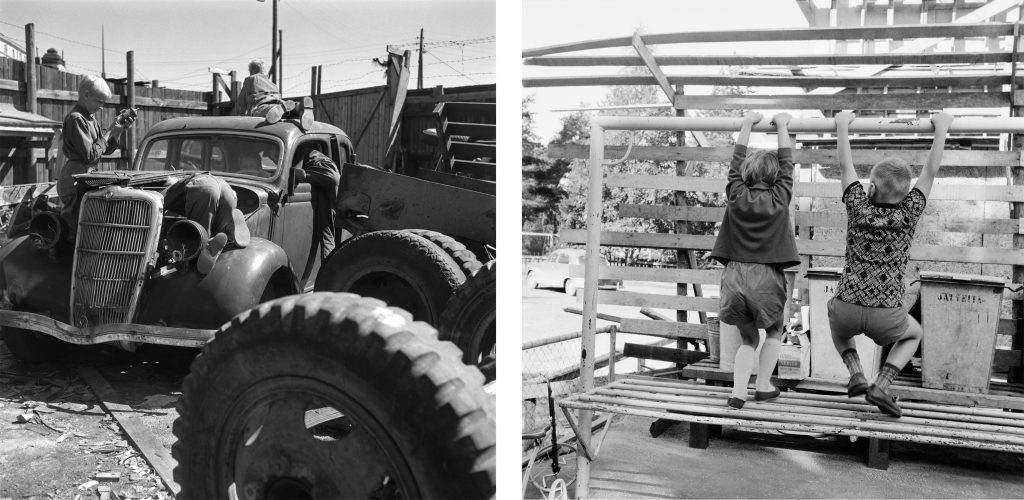
Photos: Finnish Heritage Agency.
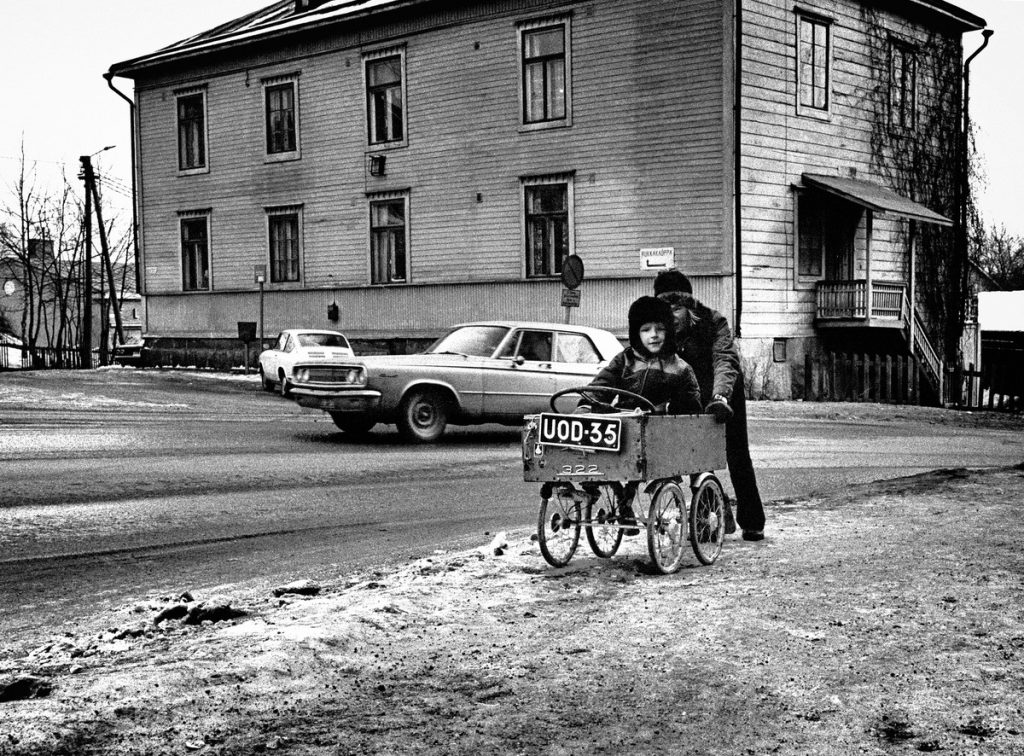
Photo: Hans Paul, provided by Finnish Heritage Agency.
This steering children away from streets has contributed what childhood, particularly in larger Finnish cities, looks like today. Physical activity is often obtained through organised sports rather than informal outdoor play and movement. Taking their children to out-of-school activities, even when it means travelling longer distances and organising family routines around them, can be one of the ways caregivers enact good parenting.
For many caregivers, chauffeuring comes down to the sense of responsibility for their children’s safety and well-being in relation to heavy traffic and long travel distances. Their beliefs about safety on roads are multifaceted in nature and may not necessarily align with objective conditions. For instance, parents whose children routinely use active travel modes tend to perceive traffic conditions as safer than parents whose children are driven. Parents may also be reluctant to allow their child to travel independently if the child has no friends or siblings to travel with, or if independent travel appears uncommon in their local neighbourhood.
In rural and sparsely populated settings, achieving and maintaining positive attitudes towards active travel will be particularly challenging due to the ongoing trend towards larger school units and the closure of small schools. These reforms lengthen school distances, while transport options may be limited in these areas, which raises important transport justice concerns.
Municipalities are generally required to provide free transport for pupils who live more than 5 kilometres from school, either by arranging school buses or by paying an allowance towards travel costs. Active school travel, however, has been found to decline sharply when the distance exceeds 2 kilometres. More children and adolescents will lack positive experiences of commuting independently by walking, cycling and public transport. Yet, such experiences have been shown to be formative and to encourage sustainable travel behaviour later in life.
Widespread car ownership among families with children, to some extent, reduces the pressure on municipalities to make more substantial investments in alternative transport options. Moreover, opportunities to promote mixed modes of travel appear to be underexplored, although interventions that limit door-to-door chauffeuring may improve traffic conditions near schools, as well as increase health benefits arising from school travel.
Deviating from the dominant mobility narratives and conventional solutions, while also ensuring that the transition towards a more sustainable transport system is implemented fairly, requires meaningful citizen involvement and effective communication. In the context of promoting children’s active travel, it means engaging, educating and collaborating with parents, schools and local communities. These stakeholders evidently all play an important role in supporting and encouraging children to travel independently and actively. However, it is equally important to meaningfully engage children themselves in the planning process if interventions are to achieve better outcomes.
Active school travel as a social activity
The social dimension of mobility is increasingly recognised as a potential leverage point for thinking about the promotion of active school travel in new ways. Research that draws on child-centred approaches has made valuable contributions to this discussion.
In this respect, it is worth highlighting a 2020 study from Auckland, New Zealand, that explored how children aged 8–13 perceived and preferred their school travel routes. Children were surveyed on what they like and dislike about their school journeys, and what they like to do during them. The questions were specifically designed to be open-ended to avoid steering children’s responses.
Based on the gained insights and reviewed literature, the authors also developed a framework. It can serve as a starting point for researchers and practitioners seeking guidance on how to assess the various factors shaping children’s perceptions of school travel. For instance, it could be used to guide discussions with children in focus groups.
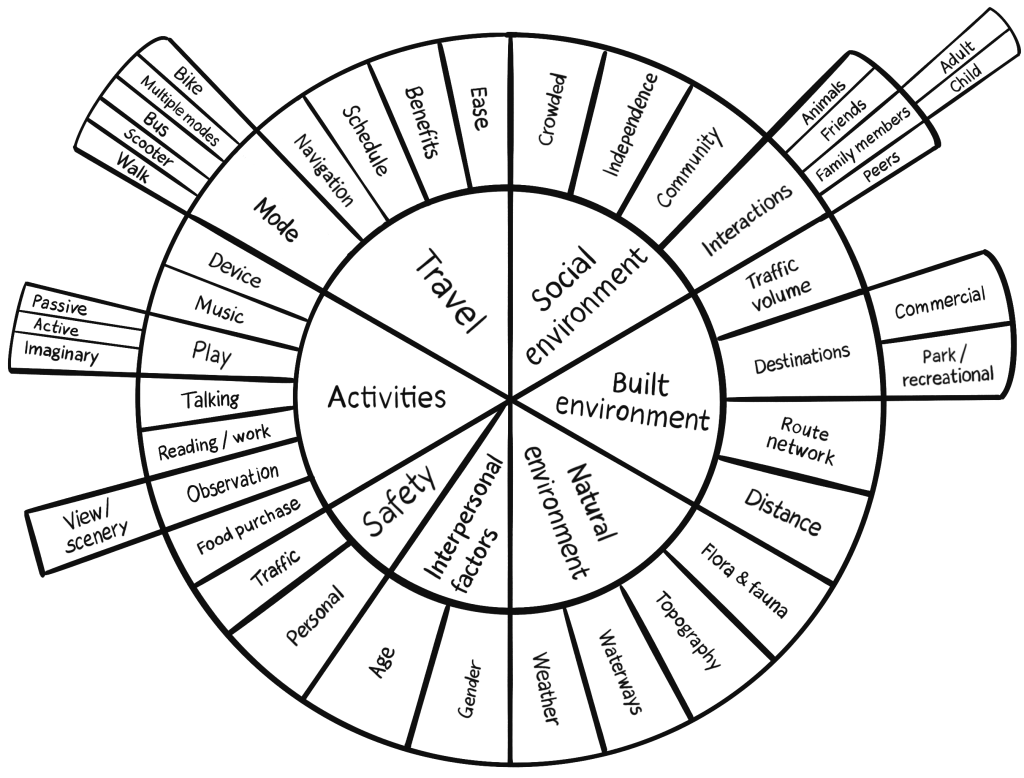
The findings of this study demonstrate how children try to make the most out of their journeys by often combining activities. Many children particularly enjoy using the school journey as an opportunity to socialise. Among those who travel by walking or using public transport, social interactions with friends were frequently mentioned, whereas children who travelled by car often valued the opportunity to talk to family members.
Meanwhile, children were found to mainly dislike heavy car traffic and crowded buses. Authors concluded that children would likely prefer travelling by walking and cycling if journeys were short, follow green routes that are physically separated from car traffic, and involve travelling together with companions.
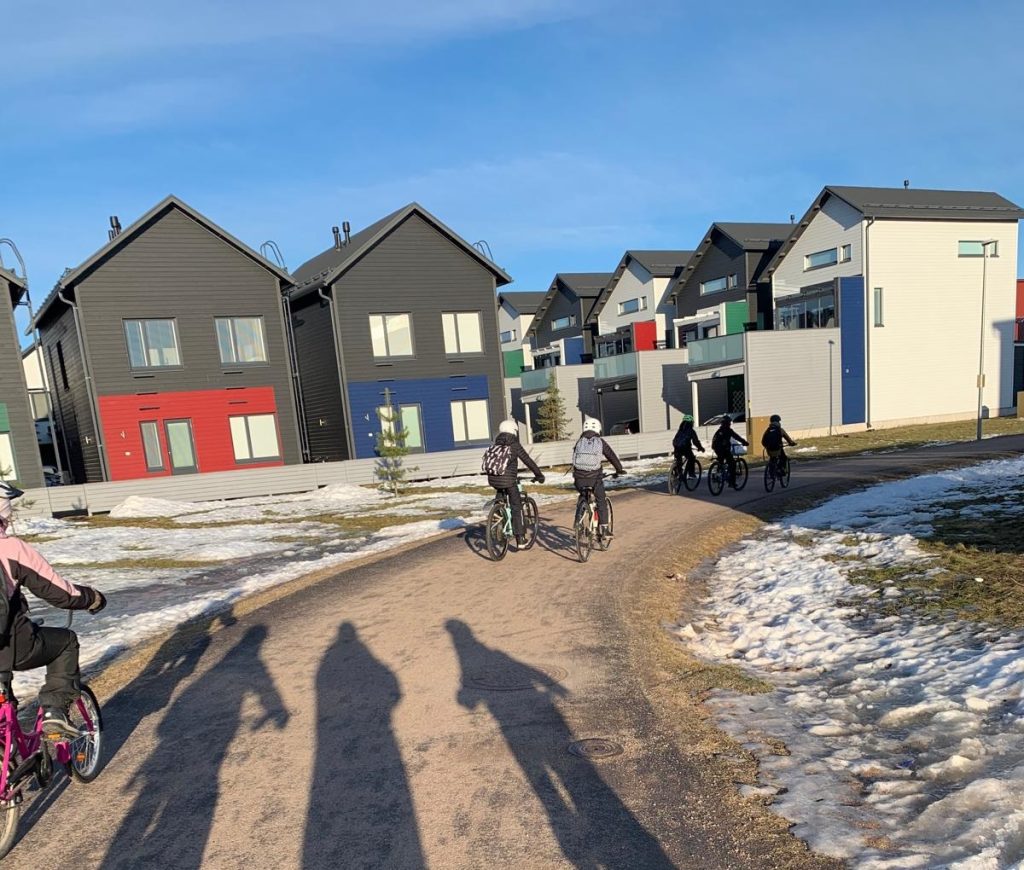
In Finnish context, Oulu can be considered a real-life example where such conditions exist: short, green routes and separated from car traffic. Preliminary insights from the research project CHIFAM Travel indicate that children in Oulu similarly find enjoyment from the social aspects of school travel, despite geographical, cultural and scale-related differences that exist between Oulu and Auckland. However, walking and cycling independently of their parents, often together with siblings or friends, is more common among children in Oulu.
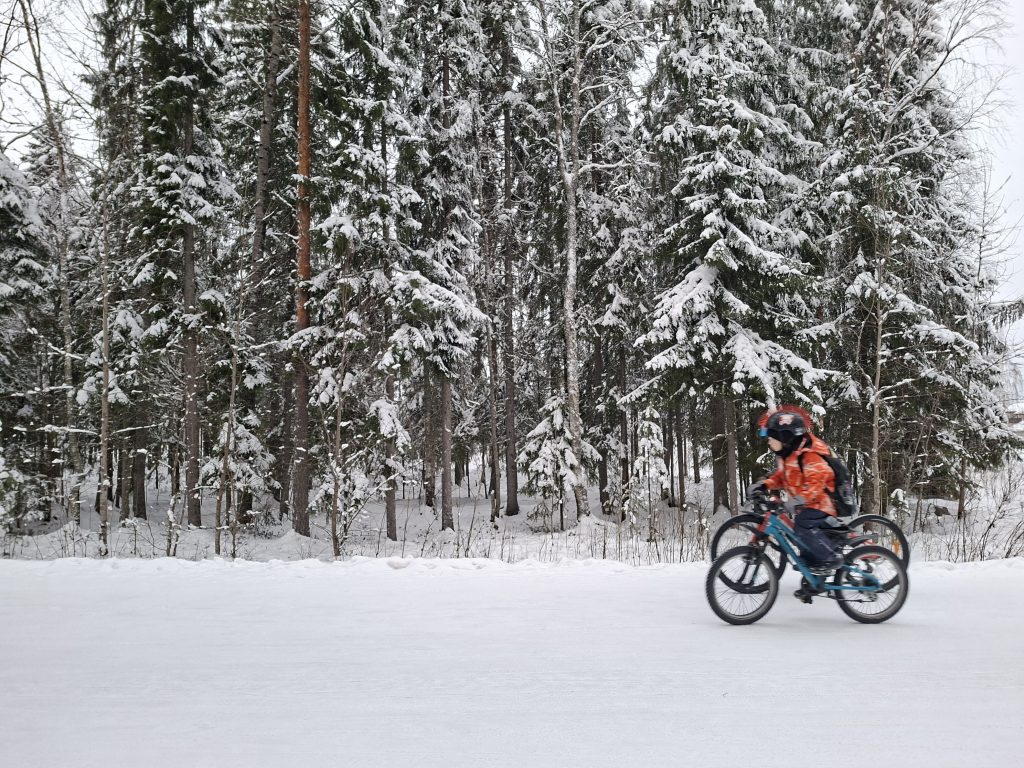
Overall, the insights gathered emphasise the significant role of the local community in encouraging independent and active school travel and in making it a social norm among both parents and children, while short travel distances, high-quality infrastructure, and separation from car traffic contribute to perceptions relating to convenience and safety.
Keeping children’s joy in mind
Children perceive, experience and navigate public landscapes in distinct ways. Their everyday journeys are not merely movement from A to B, but often meaningful social experiences in their own right. Recognising children and adolescents as competent users and experts of their everyday environments is an important starting point for engaging them in knowledge creation and decision-making processes. Policy makers and practitioners can draw on these insights to design settings and initiatives that expand the range of affordances that walking and cycling may offer. This may, in turn, foster positive emotions and meanings around sustainable mobility practices.
Walk-along interviews can be highlighted as an approach that may provide relatively rich, raw individual accounts of a specific route and moment in time. For instance, in the CHIFAM Travel project, this data collection method is currently employed alongside participatory mapping (PPGIS) and accelerometers to measure physical activity for studying travel behaviour among a large number of children in Oulu.
An alternative to an online map-based survey is to organise workshops in which children draw routes and mark places on paper maps. The maps themselves, along with stickers, image cut-outs or drawings may enable children to indicate the travel modes they typically use, express their positive and negative perceptions, and communicate desired changes. It may help identify features of streets and other public spaces that children find particularly appealing and that encourage passing through, linger, social interaction and play. These workshops may also be used to empower children to vote on concrete interventions in the , ideally with their views genuinely shaping both the planning and implementation stages.
Other ways of involving children may include asking them to document their everyday journeys through photographs and videos, focusing on particular features, experiences or challenges encountered along the way. Also, ideas for initiatives promoting active travel, such as “social school routes”, could be tested with small groups of children in collaboration with their schools before plans for wider implementation are developed.
Many methods exist for involving children in urban planning and design, and some may be more suitable for certain contexts or age groups than others. However, children’s developmental stages should be viewed as flexible, and no single participation method is capable to fully capture their environmental perceptions. Therefore, it is best to use a combination of approaches and consider how participation on its own can be a positive experience for children.
Laura Jaunākā is a Doctoral Researcher at Transport Research Centre Verne, Tampere University. Her research topics include children’s mobility practices, environments that support perceived social well-being, and transport modelling as a planning support tool within the Finnish context amid ongoing shifts in dominant transport planning paradigms.
Key references:
Banister, D. (2008). The sustainable mobility paradigm. Transport Policy, New Developments in Urban Transportation Planning, 15(2), 73–80. https://doi.org/10.1016/j.tranpol.2007.10.005
Egli, V., Mackay, L., Jelleyman, C., Ikeda, E., Hopkins, S., & Smith, M. (2020). Social relationships, nature, and traffic: Findings from a child-centred approach to measuring active school travel route perceptions. Children’s Geographies, 18(6), 667–683. https://doi.org/10.1080/14733285.2019.1685074
Ikeda, E., Hinckson, E., Witten, K., & Smith, M. (2018). Associations of children’s active school travel with perceptions of the physical environment and characteristics of the social environment: A systematic review. Health & Place, 54, 118–131. https://doi.org/10.1016/j.healthplace.2018.09.009
Jamme, H.-T., Hitzeman, J., Corcoran, N., Saadaoui, R., & Salon, D. (2026). School commute shapes sustainable transportation across generations. Transportation. https://doi.org/10.1007/s11116-026-10727-9
Kyttä, M., Hirvonen, J., Rudner, J., Pirjola, I., & Laatikainen, T. (2015). The last free-range children? Children’s independent mobility in Finland in the 1990s and 2010s. Journal of Transport Geography, 47, 1–12. https://doi.org/10.1016/j.jtrangeo.2015.07.004
Laakso, L., Telama, R., Nupponen, H., Rimpelä, A., & Pere, L. (2008). Trends in leisure time physical activity among young people in Finland, 1977—2007. European Physical Education Review, 14(2), 139–155. https://doi.org/10.1177/1356336X08090703
Mansfield, R. G., Batagol, B., & Raven, R. (2021). “Critical Agents of Change?”: Opportunities and Limits to Children’s Participation in Urban Planning. Journal of Planning Literature, 36(2), 170–186. https://doi.org/10.1177/0885412220988645
Moll, V. (2024). Standardizing play in the century of the car: The building information cards as shapers of the ideal urban childhood in Finland in the 1960s and 1970s. Planning Perspectives, 39(6), 1287–1308. https://doi.org/10.1080/02665433.2024.2352709
Santala, S.-S., Tartia, J., & Honkanen, M. (2025). Community-driven mobility practices: Implications for designing sustainable mobility interventions. Mobilities, 20(5), 929–949. https://doi.org/10.1080/17450101.2025.2477171
Suomalainen, E. (2025). Driving change or stuck in place? Mobility justice in Finnish and European transport policy. Ambio. https://doi.org/10.1007/s13280-025-02283-w
Supa, M., Willett, R., Kumpulainen, K., Rajagopal, H., Byman, J., Coleman, L., Kociubuk, J., Renlund, J., Wong, C. C., & Wong, M. (2026). Rethinking temporalities through being with children: A dialogic reflection. Global Studies of Childhood, 16(3), 291–309. https://doi.org/10.1177/20436106261449427
van den Berg, P., Waygood, E. O. D., van de Craats, I., & Kemperman, A. (2026). Social contact, social cohesion, and social safety outcomes of children’s school travel. Journal of Transport Geography, 130, 104481. https://doi.org/10.1016/j.jtrangeo.2025.104481
Wilson, K., Clark, A. F., & Gilliland, J. A. (2018). Understanding child and parent perceptions of barriers influencing children’s active school travel. BMC Public Health, 18, 1053. https://doi.org/10.1186/s12889-018-5874-y


